Loading…
TVMobileWeb2026
StreamNest
A Netflix-grade streaming platform for Apple TV and iPhone — billboard heroes, focus-driven rows, profiles and Continue Watching — rebuilt screen by screen to match the experience people already know.
In production on Apple TV & iPhone (private)
SwiftSwiftUItvOSiOSAVKitTypeScriptBunFastifySQLiteDrizzle ORMZodReactViteFFmpegTMDB APICloudflare TunnelRaspberry PiXCUITest
Overview
StreamNest is a full streaming service — a native Apple TV app, an iPhone app, a TypeScript API and a web admin console — built to feel exactly like the big-name streaming apps viewers use every day.
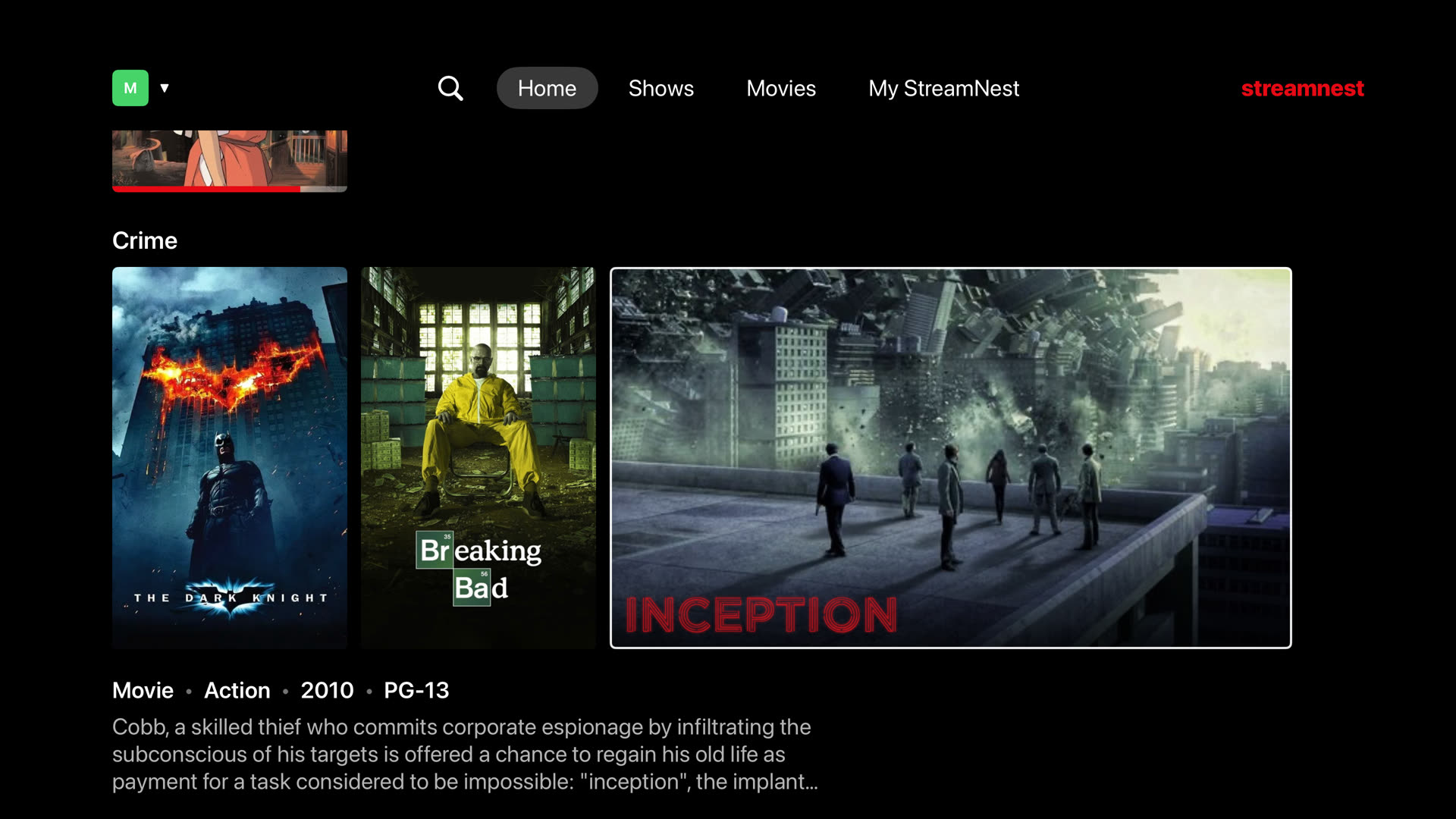
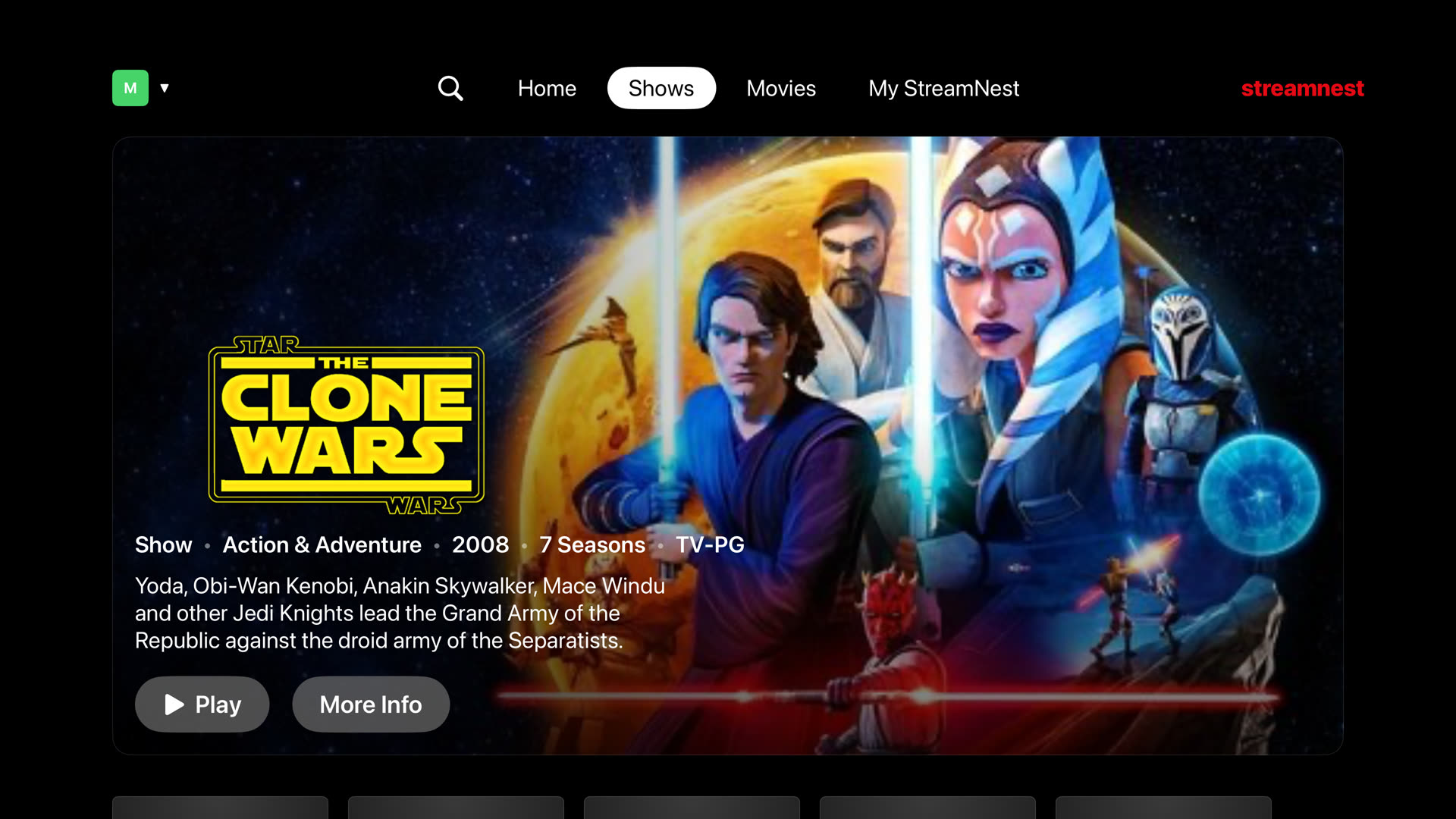
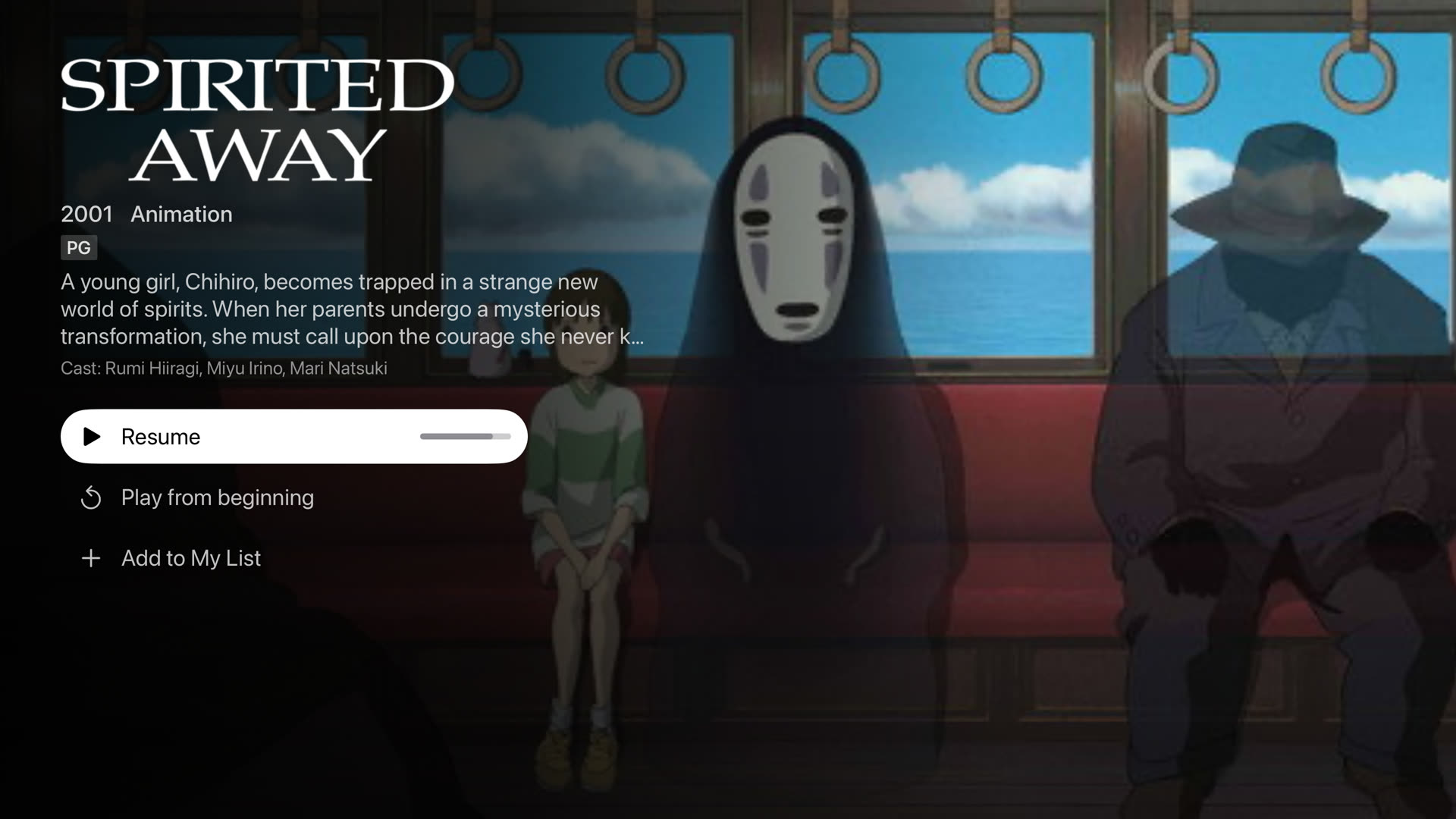
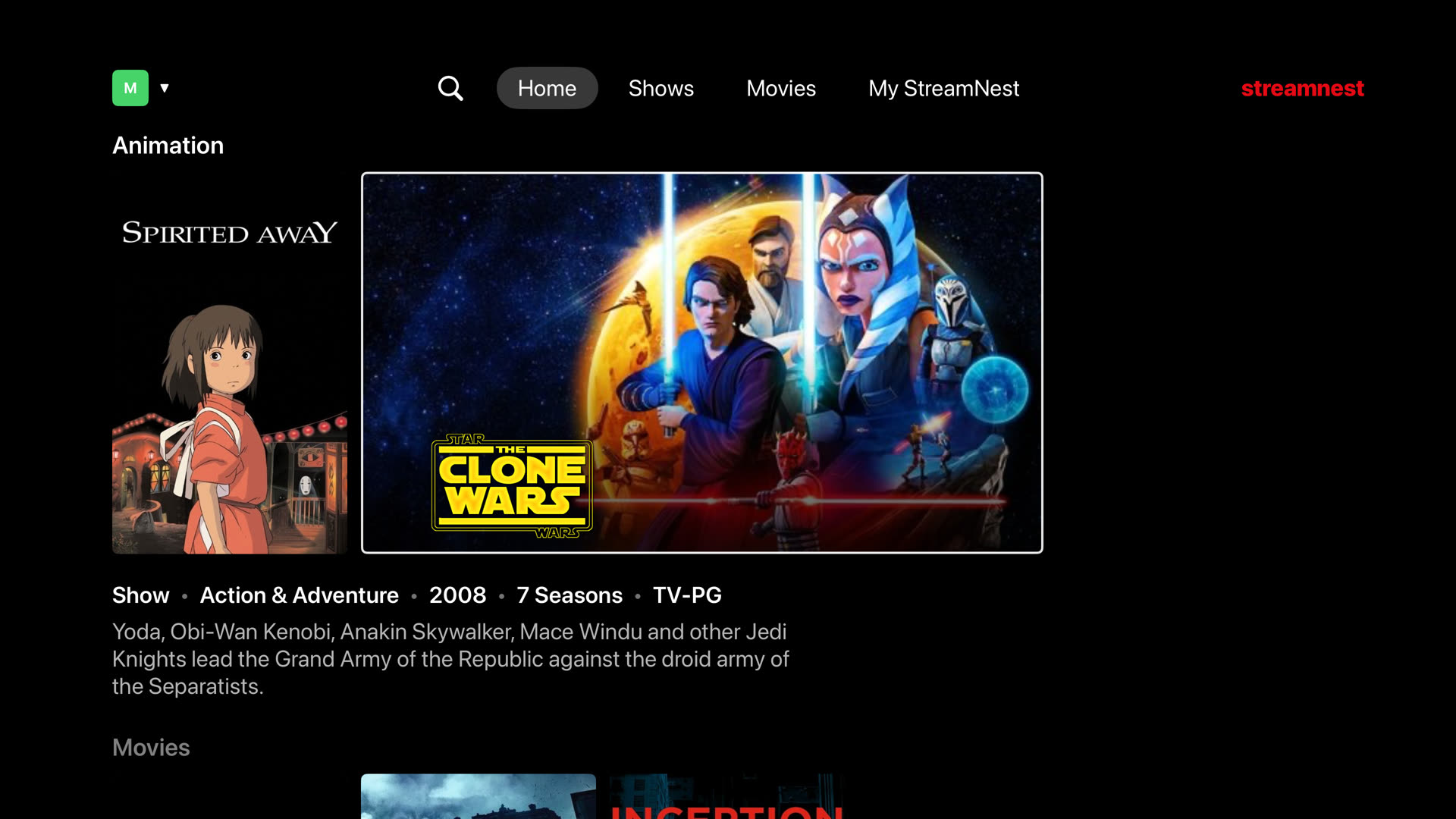
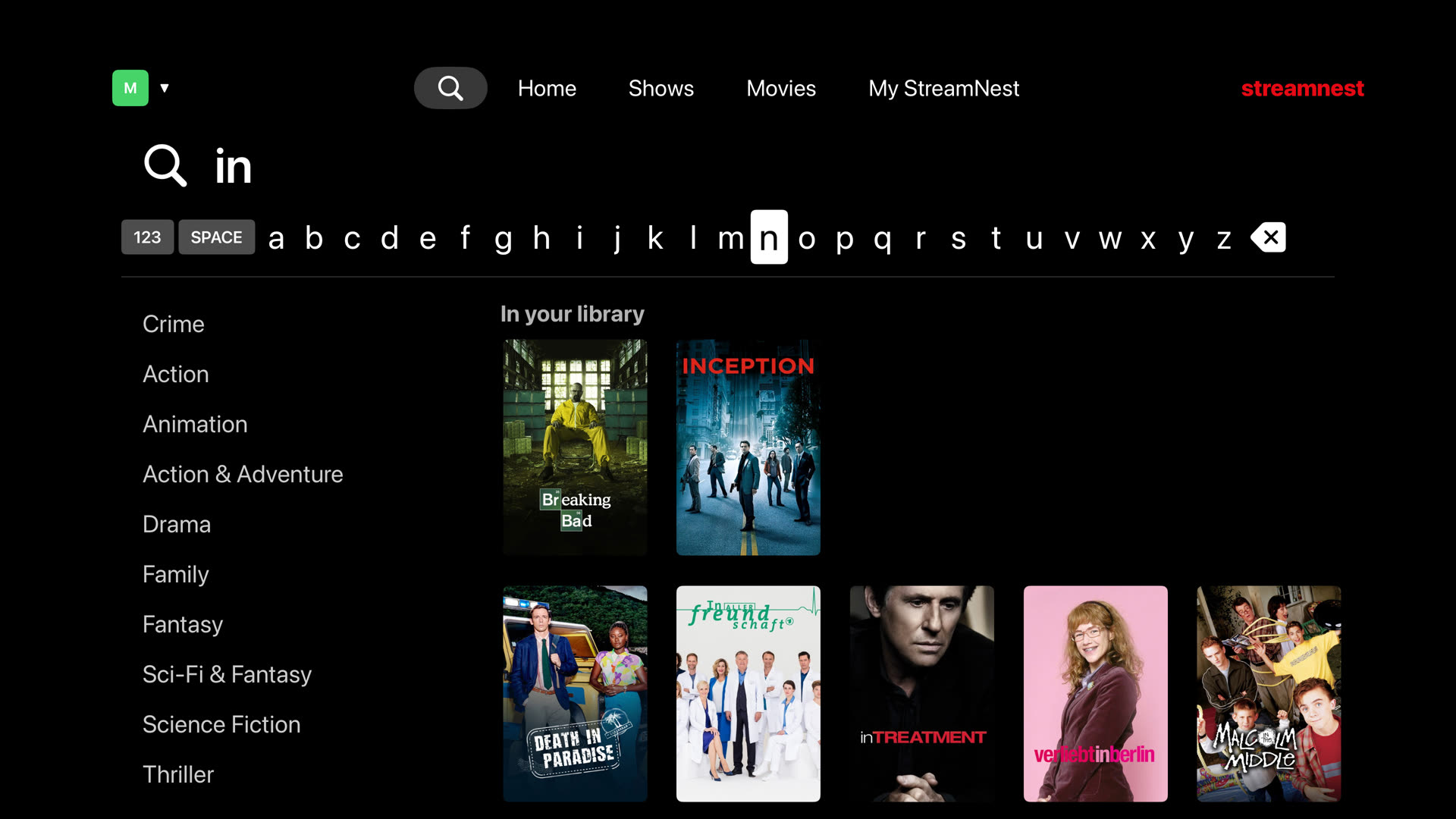
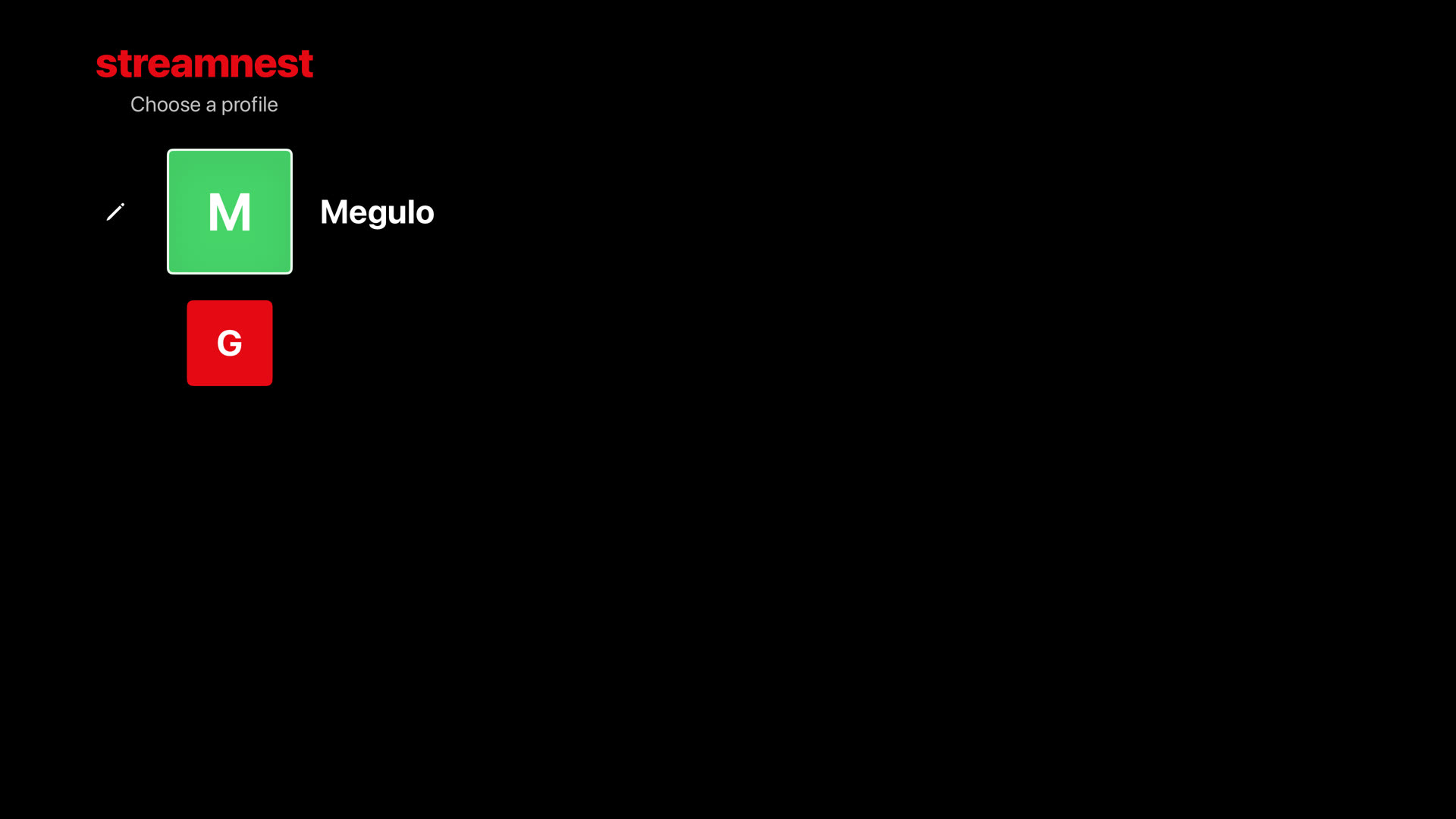
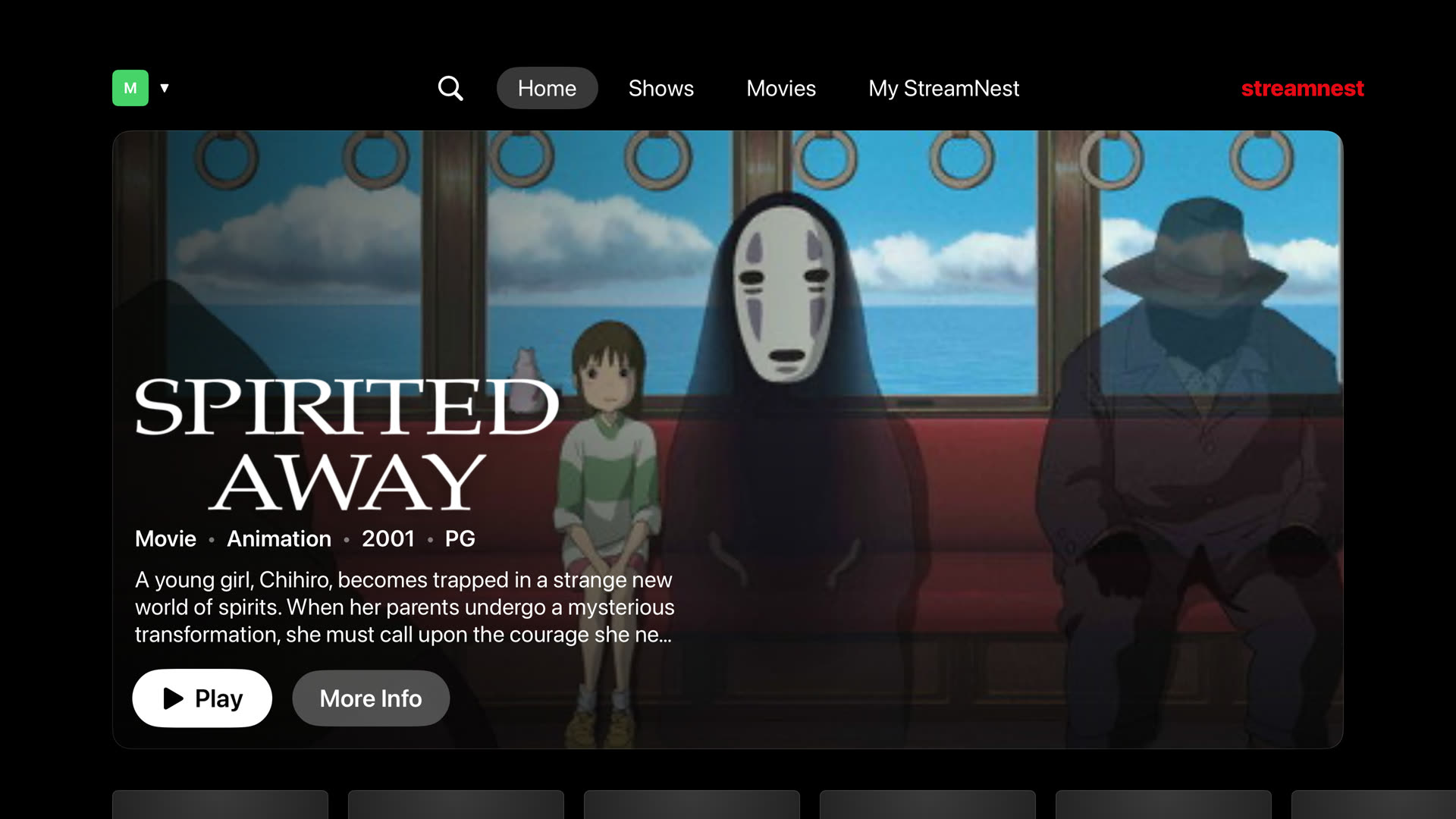
On the TV, viewers pick a profile and land on an inset billboard with title art, ratings and a synopsis, then browse genre rows where the focused tile expands into a wide still with details underneath. Dedicated Shows, Movies and My StreamNest tabs, on-screen keyboard search, Continue Watching with progress, My List, and a full-screen player round out the experience. The iPhone app adds downloads for offline viewing, and an admin console manages the library, users and background jobs.
- Our Role
- Product Design, Full-Stack & Native Apple Development
- Platforms
- TV · Mobile · Web
- Year
- 2026
Key Features
- 01Pixel-measured parity with a leading streaming app on Apple TV
- 02Focus-driven rows with expanding tiles and row snapping
- 03Inset billboards with title art, ratings and synopsis
- 04Profiles, My List and Continue Watching with progress
- 05On-screen keyboard search with genre browsing
- 06iPhone app with offline downloads
- 07Web admin console for library, users and jobs
- 08Raspberry Pi worker fleet for scalable media processing
Challenge
"Make it look like Netflix" is easy to say and hard to deliver on a TV. The 10-foot interface lives or dies on focus behavior — how tiles grow, how rows snap, what the remote does at every edge — and the details that make it feel premium are rarely documented. On top of the UI, the platform needed a catalog with real artwork and metadata, smooth seeking over the internet, multiple profiles, and a backend that could scale media processing without a big cloud bill.
Solution
I treated the reference app as a spec. An automated XCUITest walk captured every screen of the reference experience on a real Apple TV 4K along with its accessibility tree, giving exact measurements — 68 pt margins, 310×504 tiles that expand to 900×504 on focus, 24 pt corner radii, a 112 pt nav bar. Every gap between that and StreamNest was logged in a parity matrix and closed in SwiftUI: a custom top navigation bar replacing the system tab bar, row-snapping vertical scroll, an info panel under the focused row, inset billboards with title logos, and a Netflix-style profile picker. The backend is TypeScript on Bun and Fastify with SQLite via Drizzle, TMDB metadata and artwork, HTTP range streaming for instant seeking, and a typed API contract shared across every client. Heavy media processing fans out to a fleet of Raspberry Pi workers over Cloudflare Tunnels, each adding capacity with a one-command installer.
Results
StreamNest runs in production on Apple TV and iPhone and is close to indistinguishable from the app it was modeled on — the same layout, motion and remote behavior, under its own brand. The measured parity process is now a repeatable playbook: given any app or website, I can capture it, measure it, and rebuild it faithfully for a client's own product and content. Adding a Raspberry Pi to the worker fleet adds processing capacity in minutes, keeping running costs to a home server and a few small boards.
Gallery